
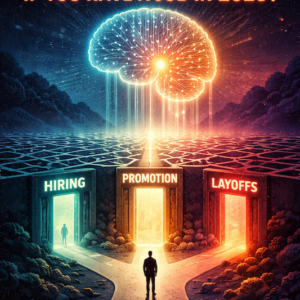
 The demand for PMP-certified project managers is changing rapidly in 2026. While the Project Management Professional (PMP®) certification was once considered a strong guarantee of career stability, many organizations are now reducing or eliminating traditional project management roles. As a result, an increasing number of PMP project managers are experiencing layoffs, role downgrades, or difficulty finding new opportunities.
This article explores why PMP project managers are losing jobs in 2026, what trends are driving this shift, and how professionals can protect their careers through continuous learning and PDU training with PDUcampus.
Why PMP Project Managers Are Losing Jobs in 2026
1. Shift from Traditional Project Management to Business Outcomes
In 2026, companies are no longer focused solely on schedules, budgets, and documentation. Employers expect project managers to deliver measurable business value, align projects with strategy, and contribute directly to organizational growth.
Project managers who rely heavily on traditional waterfall methodologies without adapting to modern delivery models are increasingly seen as replaceable.
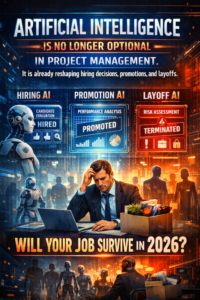
2. Automation and AI Are Reducing the Need for Classic PM Roles
Artificial intelligence and automation tools are transforming project management. Modern platforms now handle:
Project scheduling and forecasting
Risk identification and alerts
Status reporting and dashboards
Resource planning
As these tools mature, companies need fewer project managers focused on coordination and more leaders capable of decision-making, stakeholder influence, and change management.
3. Rise of Hybrid, Agile, and Product-Oriented Roles
- Another major trend affecting PMP jobs in 2026 is the rise of hybrid roles, including:
- Agile Project Manager
- Product Manager
- Delivery Manager
- Program or Transformation Manager
These positions combine project management with Agile, product ownership, and business leadership. PMP-certified professionals who lack Agile or hybrid experience often struggle to compete in this new job market.
Is PMP Certification Still Valuable in 2026?
Yes—but it is no longer enough on its own.
Employers now prioritize for project managers who demonstrate:
- Continuous professional development and learning mindset
- Agile and hybrid delivery knowledge
- Leadership and communication skills
- Digital and AI literacy
- Strategic thinking beyond project execution
Without ongoing learning and PDU accumulation, PMP professionals risk becoming outdated. PMP project managers who stop learning after certification are at higher risk of career stagnation or job loss.
How PMP Project Managers Can Stay Relevant in 2026
To survive and grow in today’s job market, PMP professionals must shift from a certification-first mindset to a skills-first mindset. Continuous learning—whether or not it includes formal PDUs—is becoming essential—it is a career survival strategy.
Train and Earn PDUs with PDUcampus
PDUcampus provides PMP professionals with a flexible and effective way to earn Professional Development Units (PDUs) while staying aligned with current industry trends and PMI® Talent Triangle requirements.
With PDUcampus, project managers can:
- Maintain their PMP certification with PDUs
- Strengthen leadership, Agile, and strategic skills
- Learn at their own pace with online courses
- Stay competitive in a rapidly evolving job market
- Take Artificial Intelligence for the Modern Project Manager – 10 PDUs course
- Take AI and Advanced Skills for the Project Manager – 45 PDUs course bundle
- Tale Modern Project Manager Advanced Skills, AI, Project Software, and Scrum – 60 PDUs course bundle
- Save an extra 20% discount on AI-related courses or bundle of courses with coupon code 2026AIPDU.
- These AI courses contribute to professional education and can be reported as PDUs, while helping project managers understand how AI is reshaping the profession.
In 2026, project managers who invest in continuous learning through platforms like PDUcampus are far more likely to remain employed and advance their careers.
 Conclusion: The Future of PMP Project Managers
The rise in PMP project managers losing jobs in 2026 does not signal the end of project management—it marks a transformation of the profession. Traditional PM roles are shrinking, while strategic, Agile-enabled, and digitally skilled project leaders are in high demand.
PMP professionals who adapt, reskill, and continuously earn PDUs will continue to thrive. Those who do not risk being left behind.
The future belongs to project managers who evolve with the profession.
References
Project Management Institute (PMI®) – Pulse of the Profession
PMI® Talent Triangle® Framework
World Economic Forum – Future of Jobs Report
Gartner – Project and Portfolio Management Trends
McKinsey & Company – Automation and the Future of Work
Disclaimer
PMP®, PMI®, Project Management Institute® and Talent Triangle® are registered trademarks of the Project Management Institute, Inc. This content and PDUcampus (is an independent training platform) are not affiliated with, endorsed by, or sponsored by PMI®.
Courses offered by PDUcampus are provided for professional education and skill development purposes. Learners are responsible for self-reporting their learning activities as PDUs in accordance with PMI’s Continuing Certification Requirements (CCR) program and determining how their learning applies to their individual certification requirements.
The information provided on this website and in related articles is for general informational and educational purposes only. It does not constitute professional, certification, legal, or career advice. Employment trends, job market insights, and future outlooks discussed are based on general industry observations and may vary depending on geography, industry, and organizational context.
Discounts, course availability, and promotional offers are subject to change without notice.